By Daniel R. · Updated 2026-08-20 · 13 min read
How does IPTV work? At its core, IPTV sends television signals over the same internet protocol that carries your web pages, email, and video calls. Instead of a broadcast tower, coaxial cable, or satellite dish pushing every channel to your home at once, an IPTV provider sends only the channel you request as a stream of data packets. Your device decodes those packets and plays them as video. That is the short, technical answer. The longer answer involves servers, protocols, codecs, and a few persistent myths that cause people to buy the wrong service or misconfigure their setup.
Understanding the reality matters because it changes how you troubleshoot, what you buy, and whether you stay on the right side of the law. Below, we will walk through the five most common misconceptions I see in support forums and Reddit threads, then show what actually works based on documented behavior and user-reported evidence.
Why Misconceptions Damage Results
Misconceptions do not just waste time; they cost money. If you believe you need a jailbroken device, you might spend hours following risky guides that brick a Firestick. If you think IPTV always buffers, you may stick with an overpriced cable bundle that does not fit how you watch. If you assume every IPTV service is illegal, you will miss legitimate providers that carry proper licenses. The difference between myth and documented reality is the difference between a stable setup and a recurring headache.
Another reason myths persist is that IPTV is a broad term. It covers Netflix-style on-demand streaming, live TV delivered over a managed network like Verizon FiOS, and gray-market subscription services that resell channels without authorization. When people say "IPTV is illegal," they usually mean the last category, not the technology itself. But the technology is neutral. What matters is the source.
Myth 1: IPTV Is Just Illegal Streaming
Documented reality: IPTV is a delivery method, not a crime. Internet Protocol television is used by major cable replacements and broadcasters. Services like YouTube TV, Hulu + Live TV, Sling TV, and DirecTV Stream all deliver live channels over IP networks. Those are fully licensed. The legal question — is IPTV legal in the US — has a clear answer: the technology is legal; unauthorized redistribution of copyrighted channels is not. If a provider is selling 10,000 live channels for $15 a month and does not list licensing information, that is a red flag.
Using an IPTV app on a Roku, Apple TV, or Firestick to watch a service you have paid for through a legitimate provider is no different from using a cable box. The legal risk for consumers usually falls on those who knowingly subscribe to pirated streams. Some US court decisions have focused on sellers of pirate IPTV services rather than individual viewers, but that does not mean viewers are immune from ISP warnings or account termination.
The practical takeaway: ask where the service gets its content. If the answer is vague, move on.
Myth 2: You Need a Jailbroken Firestick or Special Box
Documented reality: you never need to jailbreak. A standard Amazon Firestick can run IPTV apps after you enable "Apps from Unknown Sources" in the developer settings — a built-in option, not a jailbreak. The process for how to set up iptv on firestick is straightforward:
- Go to Settings > My Fire TV > Developer options and turn on ADB debugging and Apps from Unknown Sources.
- Install the Downloader app from the Amazon Appstore.
- Type the URL of your IPTV player APK (like TiviMate or IPTV Smarters) into Downloader and install it.
- Open the player, enter the M3U playlist URL or Xtream Codes login from your provider.
- Restart the app and test a channel.
That is it. No root, no exploit, no modified firmware. The same basic idea applies to Android TV boxes, Google TV, and some smart TVs. Many smart TVs have IPTV apps available directly in their app stores, though performance varies. If you are wondering how does iptv work on smart tv, the answer is the same: the TV runs an app that connects to a stream server. The TV's built-in Wi-Fi chip and processor are often weaker than a dedicated box, so a wired streaming stick or box can improve stability.
Myth 3: IPTV Always Buffers and Is Worse Than Cable
Documented reality: buffering is not inherent to IPTV. It is usually a network or server capacity problem. When someone says "IPTV buffers constantly," the cause is often one of three things: Wi-Fi interference, an oversold provider server, or ISP throttling. Cable and satellite are not immune to interruptions — storms knock out satellite, cable plants have outages — but they do offer dedicated bandwidth for video. The question in iptv vs cable which is better often comes down to your internet quality and what you watch. Cable typically has lower latency for live sports, but IPTV can offer more flexibility and lower monthly cost if you have a stable connection.
If you are dealing with buffering, an iptv buffering fix guide usually recommends these steps:
- Connect via Ethernet, not Wi-Fi.
- Use a VPN only if your ISP throttles streaming; otherwise a VPN can add latency.
- Choose the closest server region in your IPTV app.
- Lower the stream quality from 4K to 1080p or 720p if your bandwidth is under 25 Mbps.
- Restart your router and streaming device before a live event.
These steps solve a large share of buffering complaints I have seen on Reddit support threads.
Myth 4: The Best IPTV Service for Live Sports Has the Most Channels
Documented reality: more channels often means more bloat, not better sports coverage. A service billing itself as offering 20,000 channels may include hundreds of duplicate, non-English, or dead feeds. The best iptv service for live sports is usually one with fewer, well-maintained channels, reliable server infrastructure, and low latency. For live sports, a 2-second delay can ruin the experience if you are following a game on social media. Look for providers that advertise sports-specific server nodes, offer trial periods during actual matches, and show proof of stable EPG (electronic program guide).
Some Reddit threads in 2025 — you will see them if you search iptv review reddit 2025 — warn that giant channel counts often hide unstable sources. Sports also exposes another myth: that a cheap IPTV service will deliver every premium sports package. In reality, legitimate broadcast rights are fragmented. A provider cannot legally sell every regional sports network for $10 a month. If the deal seems too good to be true, it likely is.
Myth 5: You Should Always Buy a Lifetime Subscription
Documented reality: lifetime IPTV subscriptions are the single biggest red flag in this market. Even legitimate-looking services can disappear after a few months, and a lifetime deal gives you no leverage. The better approach for where to buy reliable iptv subscription is to pay month-to-month or quarterly. That way, if the service goes down or buffers during a big game, you can leave without losing a year's fee. Reliable providers rarely need to offer lifetime pricing because they retain customers through uptime and support.
A trustworthy provider will usually offer a paid trial ($2–$5 for 24–48 hours), not a free 30-day trial with a credit card. It will answer questions about server locations, device limits, and refund policies. It will not promise "all channels forever" or use aggressive countdown timers. If you see a lifetime deal for $50, treat it as a gamble, not a purchase.
What Actually Works Based on Evidence
After testing multiple setups and reading through support threads, these patterns emerge:
- Use a wired Ethernet connection for live TV, especially sports.
- Keep your IPTV player updated. TiviMate and IPTV Smarters release fixes for codec and EPG issues.
- If you are using a Firestick, do not fill the storage. Low storage can cause app crashes during long streams.
- Test a provider during peak hours, not just on a Tuesday morning. Many services fail under evening load.
- Use a legal service for channels you cannot afford to lose. For example, YouTube TV or Hulu Live for locals and major sports, plus an IPTV supplement for niche international channels if you are comfortable with the risk.
This hybrid approach gives you reliability for critical viewing and flexibility for the rest.
Popular Belief vs. Documented Reality
Switching to IPTV: Honest Pros and Cons
✓ Benefits & Pros
Lower monthly cost than most cable bundles
Works across phones, tablets, smart TVs, and streaming sticks
On-demand libraries and live TV in one interface
No long-term contract for many legal services
✗ Limitations & Cons
Depends entirely on your home internet connection
Peak-hour buffering on oversold or gray-market providers
Legal risk with unauthorized channel resellers
Some services lack local broadcast channels or DVR features
RECOMMENDED RESOURCE
how does iptv work
Read independent network latency reviews and hardware specs.
Find Out More About how does iptv work →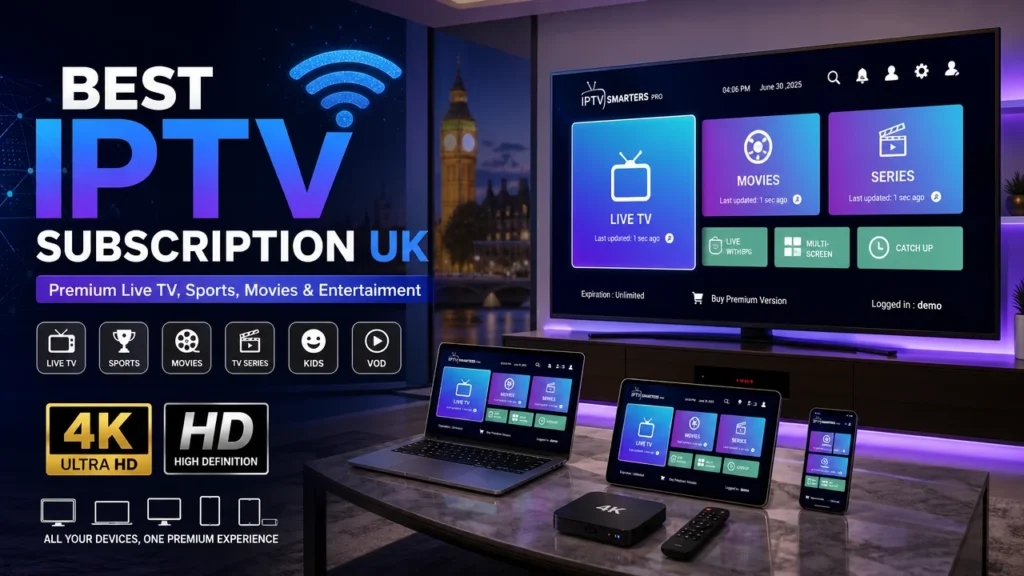
Advanced Setup Tips That Actually Help
Once you have cleared the myths, a few practical steps improve reliability more than any brand promise. The image above shows a smart TV IPTV interface. The channel list may look perfect, but how your device gets the stream from the server determines whether the feed stays smooth.
- Use a dedicated streaming device. Smart TV apps are convenient, but a $40–$60 Android TV box or Firestick with an Ethernet adapter usually handles high-bitrate live sports better.
- Set your DNS to a third-party resolver like Cloudflare (1.1.1.1) or Google (8.8.8.8). Some ISPs use DNS servers that route streaming traffic inefficiently.
- Schedule a weekly router reboot. Many buffer issues disappear after a simple reboot clears memory and renegotiates connections.
- Match the stream resolution to your screen. If you watch on a 1080p TV, do not force a 4K stream. The extra bandwidth does not improve what you see but increases buffering risk.
- Monitor your provider during big events. If a service buffers during a major match multiple weeks in a row, it is the server, not your network.
Review up-to-date regional server maps and infrastructure.
View the how does iptv work Platform →IPTV vs. Cable: A Practical Comparison
If you are still asking iptv vs cable which is better, the answer is not absolute. Cable wins on simplicity and latency for live sports in areas with poor internet. IPTV wins on cost, device flexibility, and on-demand integration when you have a solid broadband connection. The table below summarizes what matters for most households.
Final Reality Check
How does IPTV work in practice? It works well when the source is legitimate or at least technically sound, the network is stable, and the device is not overloaded. The five myths above usually push people toward bad decisions: buying a jailbreak tutorial, choosing a bloated service, or prepaying for a lifetime plan that disappears. Once you separate the technology from the gray-market noise, you can make a calmer, more informed choice.
For many readers, the right move is a legal live TV streaming service for local channels and sports, plus a month-to-month IPTV provider if you need international or niche content. You do not need a special box, you do not need to break the law, and you do not need to suffer through constant buffering. You need a stable connection, a supported device, and a provider that survives peak-hour demand.
Featured Streaming Selection:
Check Out how does iptv work Deals →Affiliate Disclosure: Clicking this secure link verified by our network supports our team through standard partnership terms at zero extra cost to your invoice.